Africa Positioned to Dominate Global High-Impact Exploration Drilling Through 2026
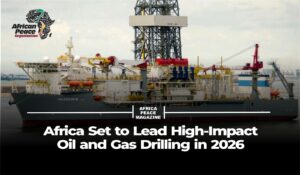
Africa is expected to maintain its position as the world’s most active region for high-impact oil and gas exploration drilling in 2026, driven by sustained interest in ultra-deepwater and frontier basins, according to new analysis from Rystad Energy. Global high-impact wildcat drilling activity carried strong momentum into 2025, with discovery success rates rising to 38% from 23% in 2024, while total discovered volumes climbed 53% year-on-year to approximately 2.3 billion barrels of oil equivalent.
Looking ahead to 2026, Rystad has identified 42 planned high-impact exploration wells worldwide, with Africa accounting for roughly 40% of the total. Activity is expected to concentrate along the Atlantic margin, particularly in the Orange basin offshore southern Africa and across the Gulf of Guinea in West Africa, reinforcing the continent’s role as a key growth engine for global exploration.
Ultra-deepwater prospects dominate the 2026 outlook, representing about 60% of planned high-impact wells. Major international oil companies are expected to lead drilling activity, followed by national oil companies and international state-owned enterprises. Most wells will target frontier regions, while a smaller share will test emerging plays or extend previously discovered basins with potential to become future production hubs.
Outside Africa, Asia is forecast to host eight high-impact wells, led by Indonesia, with additional activity planned in India and Malaysia. Although Asia has delivered roughly 18 billion boe of conventional discoveries over the past decade, recent volumes have been concentrated in a handful of mature offshore areas, limiting opportunities for large, play-opening finds. By contrast, exploration activity in North America continues to lag, with discoveries largely confined to mature basins in the U.S. Gulf of Mexico. Limited access to new frontier acreage has constrained upside, leaving the region dependent on smaller, incremental additions rather than transformational discoveries.
Source: worldoil.com